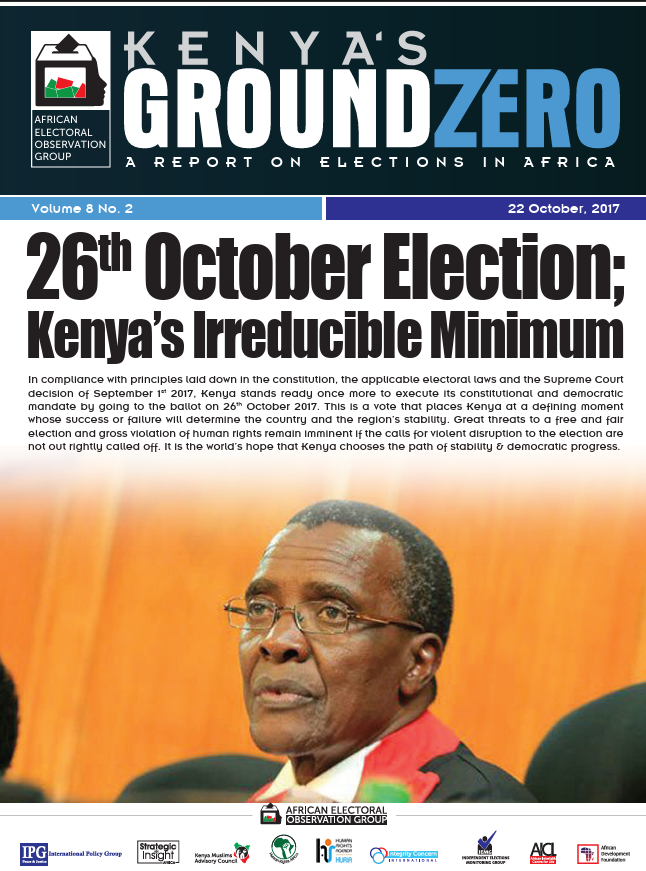
(5 August 2017, African Electoral Observation Group)
Main message
Issued two days before the 8 August 2017 general election, the report finds Kenya broadly prepared. The IEBC has put the infrastructure in place, the Judiciary has clarified key legal questions, candidates have committed to the vote, and the security services have a deployment plan. It calls the election the biggest in Kenya’s history and expects it to be free, fair and credible.
Findings by section
- IEBC and the electoral process: The commission took office only six months before the vote, after the previous commission lost public confidence. It has handled its tasks reasonably well. The biggest risk is the electronic system (KIEMS) failing. The report says the country is not prepared for the fallback of backup voter identification and results transmission, and calls this the “Achilles heel” of the election’s credibility.
- Judiciary: Courts have become a political battleground, but have also settled issues that could have caused crises. These include rulings on the finality of constituency-level presidential results, the ballot printing tender, and the need for a backup to the electronic system. After the results, the Judiciary will be the final arbiter, and the Chief Justice’s assurances of readiness need to be backed by action.
- Campaign financing: Spending is lower than in the last two elections. New rules, including designated bank accounts, anti-money-laundering scrutiny and spending caps, have restricted money flows, though they are poorly enforced. State resources are now used by opposition-run counties too, and governors’ campaigns are underwriting national campaigns.
- Security: Terrorism remains a threat. Tactics to “protect the vote” and drive turnout, which involve groups gathering and moving, could intimidate voters or restrict free choice at polling stations. The security services have promised nationwide coverage.
- Opinion polls: Polls have become political propaganda, and some firms have shown bias. The new polling law is not working, as many polls were published without their funding or methods. The report wants stricter rules and penalties for misleading polls.
- Media: Fragmented media, online outlets and fake news have weakened shared messaging and trusted voices. Complaints of bias from both presidential camps, and the controversy over the presidential debates, are concerns. The media’s role in tallying and reporting results will shape the aftermath.
Other topics covered
- the IEBC election timelines and the ballot tender dispute
- regulatory action against civil society groups doing voter education (IFES and the Kenya Human Rights Commission)
- observer missions from the EU and COMESA
- the controversy over the electoral law amendments
Conclusion
The report says Kenya has a chance to deepen its democracy, and that Africa and future generations are watching. It wishes Kenya a free, fair and credible election.